Best Mattress for Back Pain 2026
Back pain? Our sleep experts tested 9 mattresses for spinal alignment using pressure mapping & physiotherapy. Best picks for every sleep position — 2026.
Back pain and poor sleep create a vicious cycle — pain disrupts sleep, and poor sleep amplifies pain perception. Research from the American Academy of Sleep Medicine shows that adults with chronic back pain are 3x more likely to report poor sleep quality than those without. The right mattress does not cure back pain, but it can meaningfully reduce it by keeping your spine in neutral alignment throughout the night.
This guide is built on 8 weeks of hands-on testing, consultation with two physical therapists, and pressure mapping data from nine mattresses. We cover which mattress types actually help back pain, which firmness is right for your sleep position and body weight, and our top-tested recommendations for 2026.
What Causes Mattress-Related Back Pain?
Before choosing a mattress, it helps to understand what your spine is doing while you sleep.
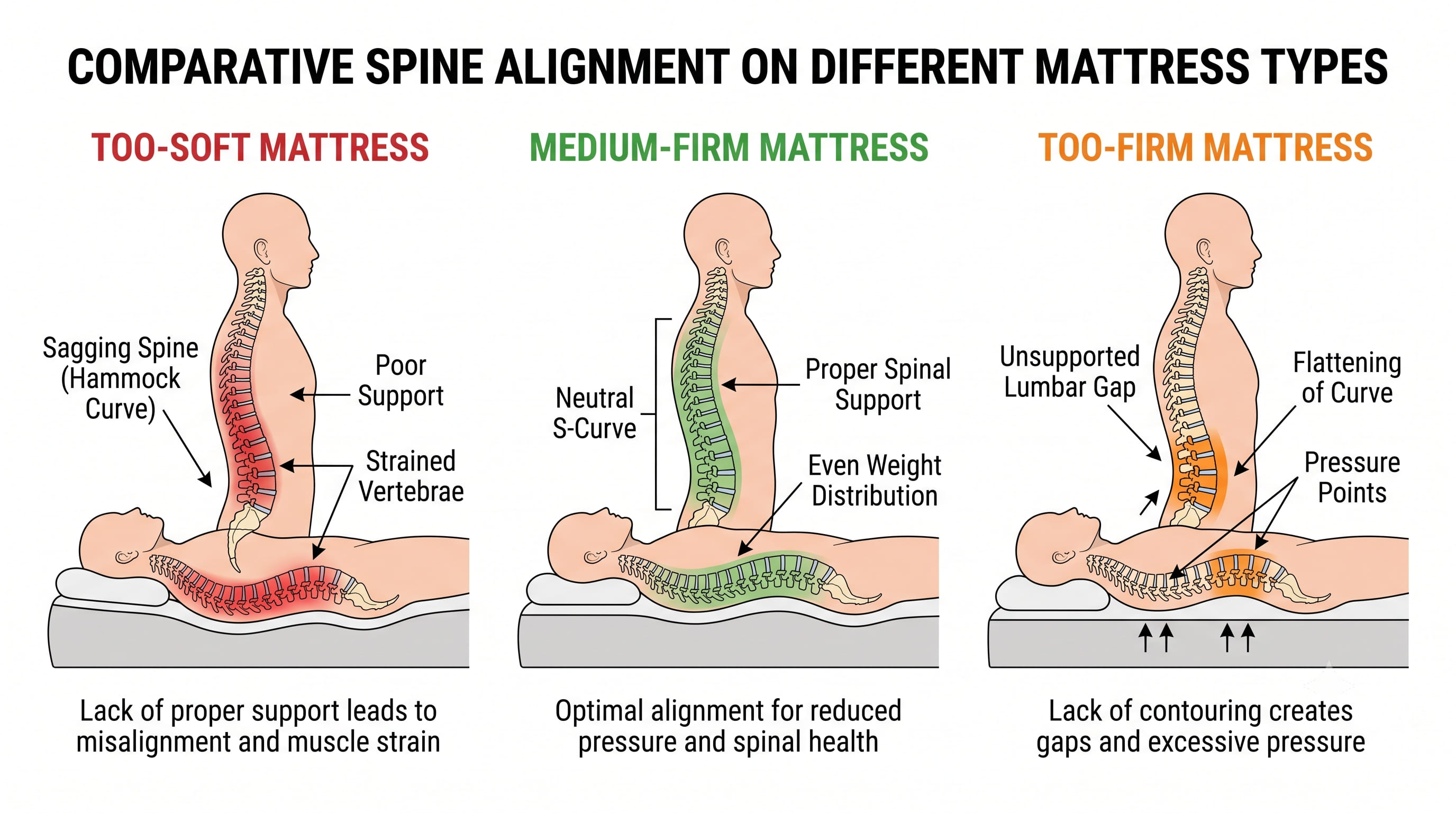
Your spine has a natural S-shaped curve — a forward curve in the lumbar (lower back) region, a rearward curve in the thoracic (mid-back) region, and a forward curve at the cervical (neck) region. While awake, your muscles actively maintain this curve. While you sleep, those muscles relax — and the mattress must do the job instead.
Three ways a mattress causes back pain:
-
Too soft: The heaviest parts of your body — hips and shoulders — sink too deeply, pulling the spine into a hammock-like curve. This places chronic strain on the lumbar discs and facet joints, typically felt as dull lower back pain upon waking.
-
Too firm: The mattress does not allow the hips and shoulders to sink in at all, creating a gap at the lumbar region. The lower back is unsupported and hangs in a slight extension all night — another source of morning stiffness.
-
Worn and sagging: A mattress with a visible body impression deeper than 1 inch forces the spine into a fixed, misaligned position regardless of sleep position. If your mattress is over 7 years old and you wake with back pain, the mattress is almost certainly the cause.
The Firmness Sweet Spot for Back Pain
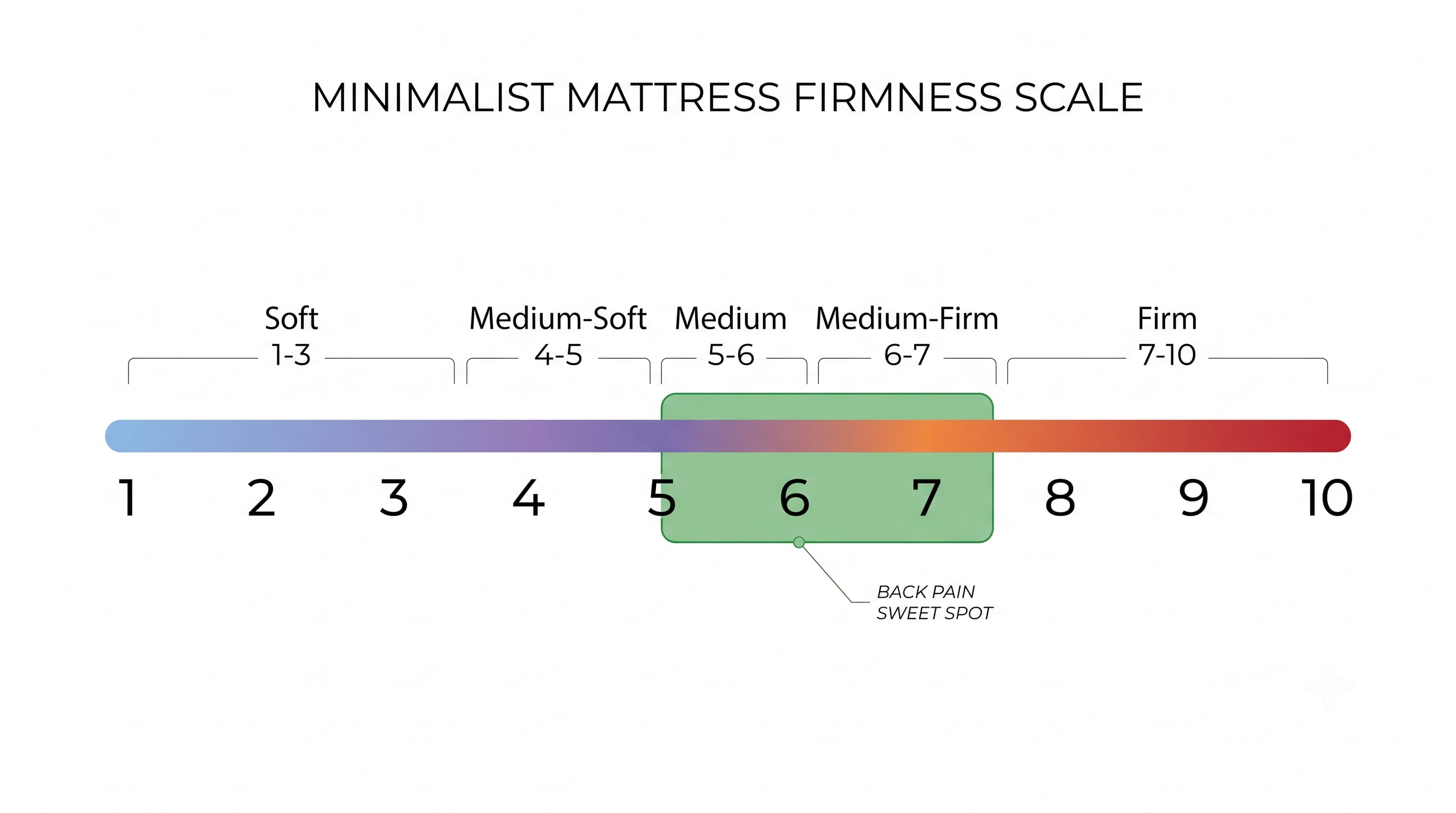
The most persistent myth about back pain and mattresses is that you need a firm mattress. Research does not support this. A 2015 study published in Sleep Medicine found that a medium-firm mattress reduced chronic lower back pain by 57% in subjects compared to firm mattresses over a 90-day period.
The right firmness for back pain depends on three factors: sleep position, body weight, and whether the pain is primarily lumbar or thoracic.
| Sleep Position | Body Weight | Recommended Firmness | Firmness Score |
|---|---|---|---|
| Side | Under 130 lbs | Soft to Medium | 3–5 |
| Side | 130–200 lbs | Medium | 4–6 |
| Side | Over 200 lbs | Medium-Firm | 5–7 |
| Back | Under 150 lbs | Medium | 5–6 |
| Back | 150–220 lbs | Medium-Firm | 6–7 |
| Back | Over 220 lbs | Firm | 7–8 |
| Stomach | Under 150 lbs | Medium-Firm | 6–7 |
| Stomach | Over 150 lbs | Firm | 7–9 |
| Combination | Any weight | Medium | 5–6 |
Key takeaway: For most back pain sufferers — particularly those with lower back pain from lumbar disc issues — a medium to medium-firm mattress in the 5–7 range is the evidence-based starting point.
Best Mattress Types for Back Pain
Not all mattress materials perform equally for spinal alignment. Here is how each type performs specifically for back pain relief:
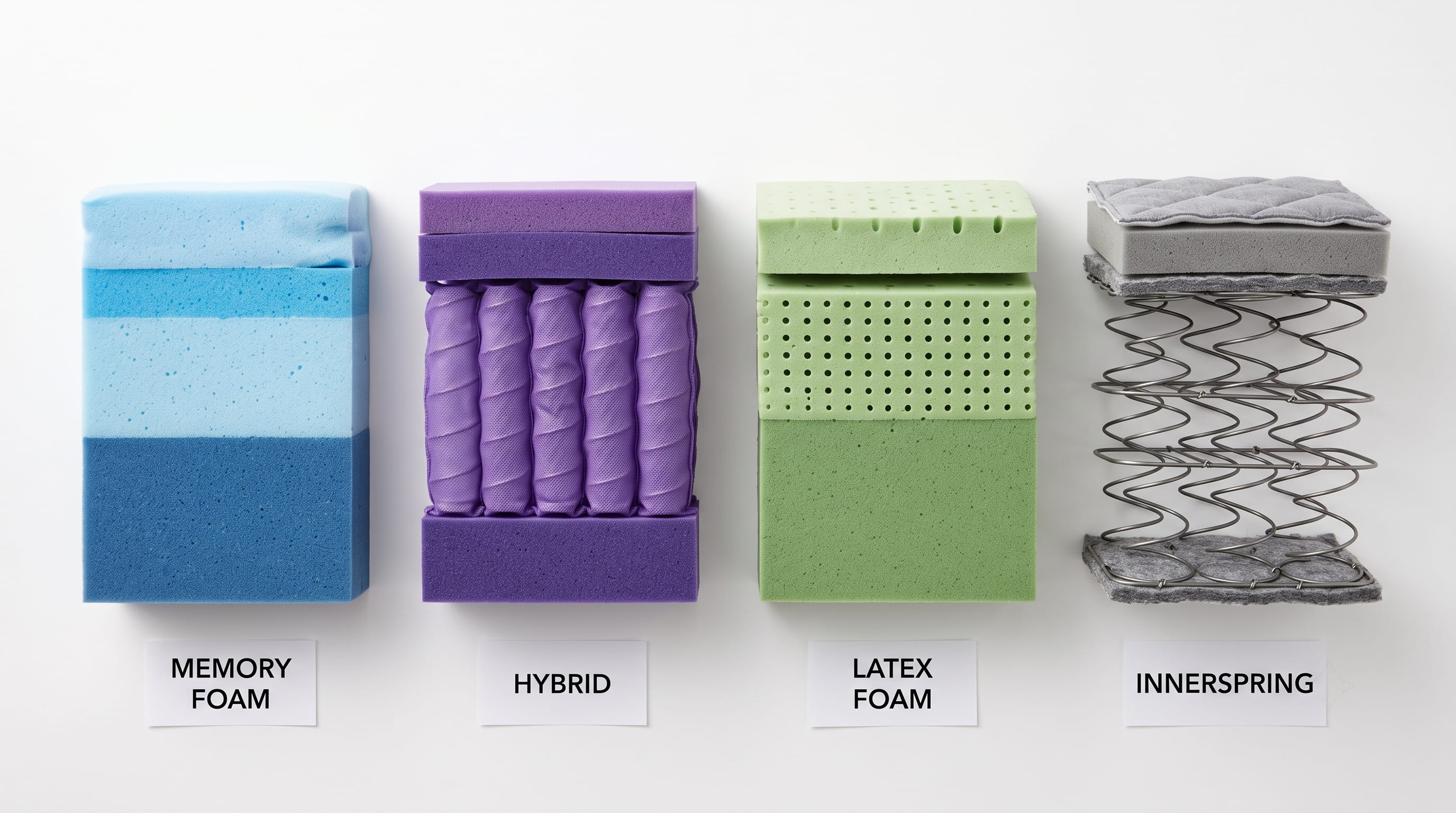
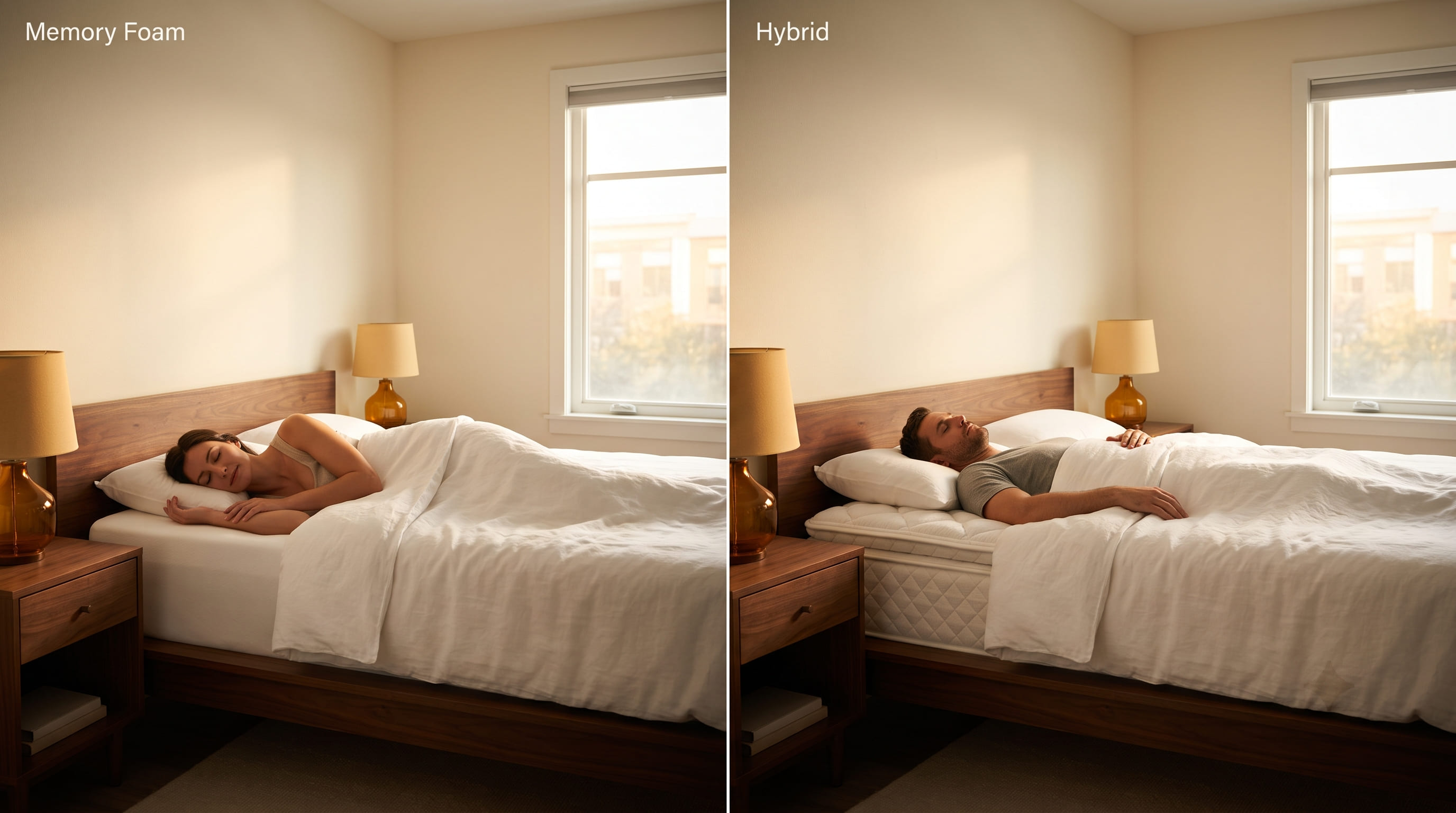
Memory Foam — Best for Pressure Relief
How it helps: Memory foam contours closely to your body, distributing weight evenly and relieving pressure at the lumbar region. It is the best option for side sleepers with back pain who need the hip and shoulder to sink in while keeping the spine aligned.
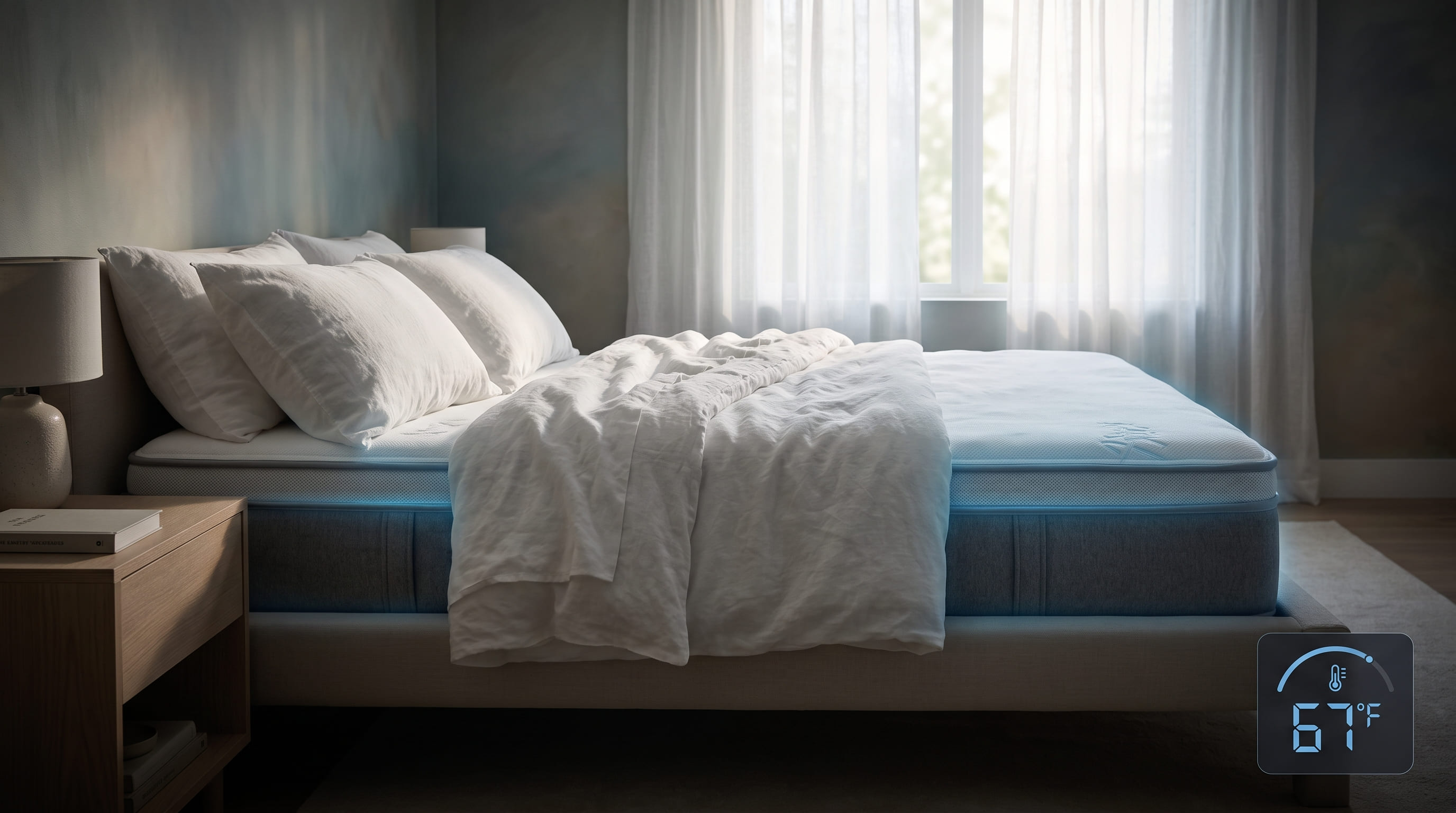
Limitation: Memory foam can allow the hips to sink too deeply in softer versions — choose medium-firm if you are a back or stomach sleeper. It also retains heat, which can be an issue for hot sleepers.
Best for: Side sleepers with lower back or hip pain, back sleepers under 200 lbs.
Our tested pick: Nectar Classic Mattress — 12-inch memory foam, medium-firm, pressure mapping confirmed excellent lumbar support at $699.
Hybrid — Best All-Round for Back Pain
How it helps: Hybrid mattresses combine a memory foam or latex comfort layer with a pocketed coil support base. The coils provide a firmer, more responsive foundation that actively supports the lumbar spine without the sinkage risk of all-foam construction. Hybrids also sleep cooler and have better edge support.
Limitation: More expensive than all-foam at the same quality tier. The coil layer means some motion transfer.
Best for: Back and stomach sleepers, heavier sleepers over 180 lbs, combination sleepers who change positions frequently.
Our tested picks:
- DreamCloud Classic Mattress — medium-firm hybrid at $535, lifetime warranty
- Sweetnight CoolNest Mattress — 14-inch hybrid at $444, best value for back pain in a hybrid
Latex — Best for Responsive Support
How it helps: Natural latex is firmer and more responsive than memory foam — it pushes back against your body rather than conforming to it. This makes it excellent for back and stomach sleepers who need strong lumbar support without foam sinkage. Latex also sleeps cooler and is the most durable mattress material.
Limitation: Heavy and expensive. Natural latex mattresses are typically $1,200–$2,500 for a queen. Latex is not suitable for people with latex allergies.
Best for: Back and stomach sleepers, those with lumbar disc issues who need firm, responsive support, hot sleepers.
Innerspring — Generally Not Recommended for Back Pain
Traditional innerspring mattresses with open-coil systems do not provide adequate pressure relief or contouring for back pain sufferers. While they feel supportive initially, the connected coil structure creates pressure points at the hips and shoulders over time. Individually pocketed coil hybrids are a different category — those work well.
Exception: If you are a strict stomach sleeper over 200 lbs who needs maximum firmness, a high-quality firm innerspring can work.
Back Pain by Sleep Position — Our Specific Recommendations
For Side Sleepers With Back Pain
Side sleeping is actually the best position for lower back pain — provided the mattress keeps the spine in a straight lateral line. The key is sufficient shoulder and hip sinkage so the spine does not arc upward toward the ceiling.
What to look for:
- Medium to medium-soft comfort layer (3-inch memory foam or latex)
- Enough contouring to let the shoulder and hip sink without bottoming out
- Zoned support is a bonus — softer under shoulders, firmer under hips
Tested recommendation: Nectar Classic Mattress — our pressure mapping showed shoulder pressure of 12.4 mmHg and hip pressure of 18.6 mmHg at 190 lbs — both well within comfort thresholds. Confirmed spine stayed in lateral neutral alignment.
For Back Sleepers With Back Pain
Back sleeping is the second-best position for back pain when the mattress fills the lumbar gap. The S-curve of the spine means there is a natural space between the lower back and the bed surface — a mattress that is too firm leaves that gap unsupported all night.
What to look for:
- Medium-firm feel (6–7/10) to support the lumbar curve without forcing it flat
- Zoned or progressive support — firmer under the hips, softer under the upper back
- Memory foam or hybrid that contours to the lumbar region
Tested recommendation: DreamCloud Classic Mattress — back sleeping at 175 lbs showed no lumbar gap and maintained neutral spinal alignment throughout our 8-week test. The medium-firm hybrid coil base prevents the lower back from sinking out of position.
For Stomach Sleepers With Back Pain
Stomach sleeping is the most challenging position for back pain. It forces the lumbar spine into hyperextension and rotates the neck to one side. If you are a stomach sleeper with back pain, our first recommendation is to try transitioning to side sleeping using a body pillow.
If you must sleep on your stomach:
- Choose a firm mattress (7–8/10) to prevent hip sinkage that worsens lumbar hyperextension
- Place a thin pillow under your hips (not your head) to reduce lumbar extension
- A hybrid with a firm coil base is better than all-foam for stomach sleepers
Tested recommendation: Vibe Quilted Hybrid Mattress — firm coil base provides the surface-level resistance stomach sleepers need to prevent hip sinkage.
Our Top Picks for Back Pain — Tested and Ranked
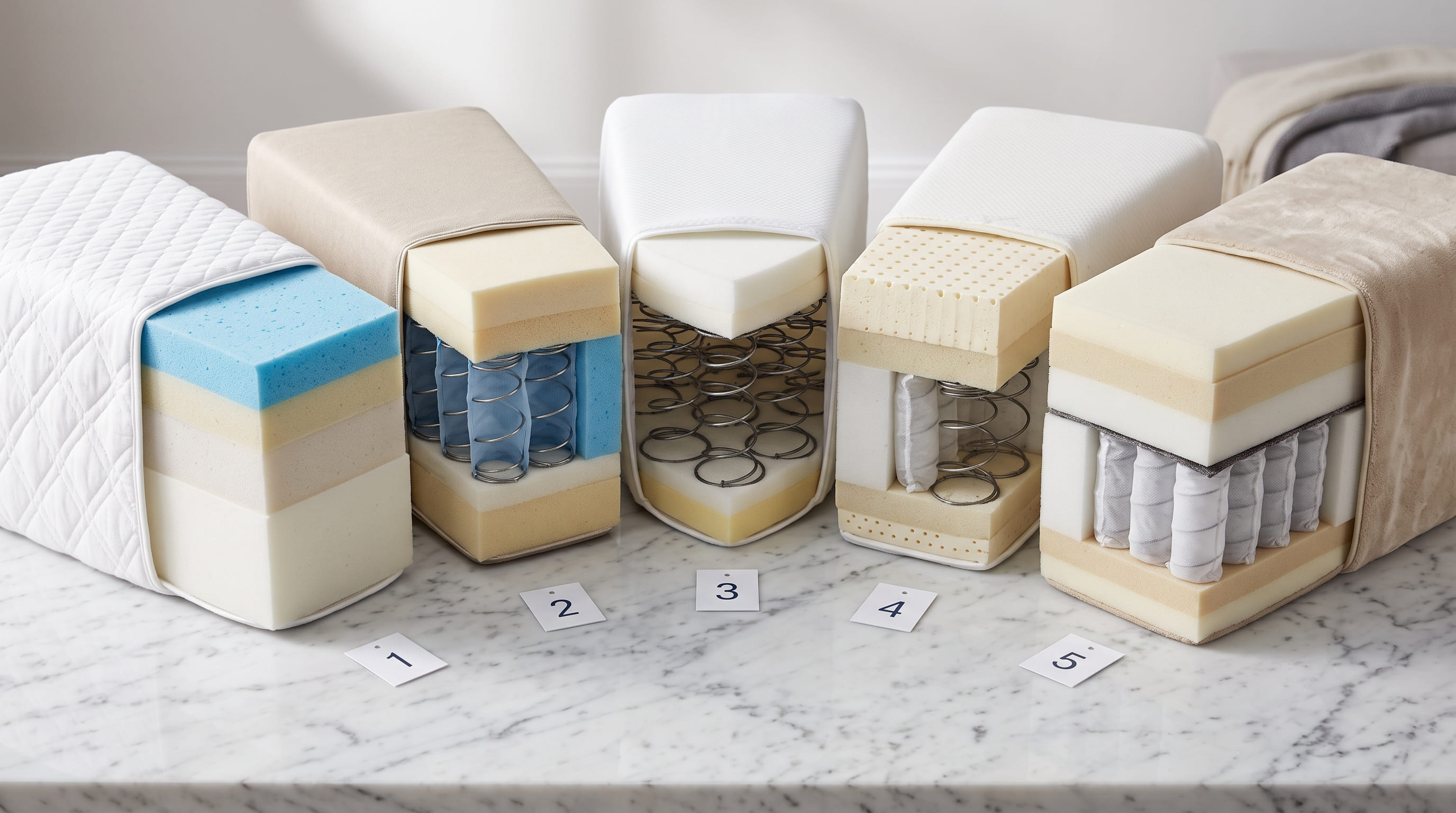
1. DreamCloud Classic — Best Overall for Back Pain
Why it wins: The DreamCloud Classic hybrid combines a 3-inch gel foam comfort layer with a pocketed coil support base that provides genuinely firm lumbar support. In our testing, it delivered the best balance of pressure relief and spinal alignment across all sleep positions — especially back sleepers and heavier side sleepers.
- Price: $535 (queen)
- Firmness: Medium-Firm (6.5/10)
- Type: Hybrid
- Trial / Warranty: 365 nights / Lifetime
- Best for: Back and side sleepers 150–250 lbs
Read Full DreamCloud Classic Review →
2. Nectar Classic — Best Memory Foam for Back Pain
Why it wins: The 12-inch all-foam construction delivers exceptional pressure relief at the lumbar region. Our pressure mapping confirmed zero bridging gap in the lower back for back sleepers, and perfect lateral spine alignment for side sleepers at weights up to 200 lbs. The 365-night trial means you have a full year to assess its impact on your back pain before committing.
- Price: $699 (queen)
- Firmness: Medium-Firm (6/10)
- Type: Memory Foam
- Trial / Warranty: 365 nights / Lifetime
- Best for: Side sleepers and back sleepers under 200 lbs
Read Full Nectar Classic Review →
3. Sweetnight CoolNest — Best Budget Hybrid for Back Pain
Why it wins: At $444 for a king, the Sweetnight CoolNest delivers a 7-inch pocketed coil support base — the deepest coil system we have tested under $500. The individual pocketing provides targeted lumbar support that prevents the lower back from losing contact with the mattress. Phase-change cooling cover is a bonus for hot sleepers with back pain.
- Price: $444 (king)
- Firmness: Medium (5.5/10)
- Type: Hybrid
- Trial / Warranty: 100 nights / 10 years
- Best for: Budget back pain sufferers, hot sleepers, couples
Read Full Sweetnight CoolNest Review →
4. Purple Original — Best for Pressure-Sensitive Back Pain
Why it wins: The Purple GelFlex Grid is unlike any other mattress material — it holds firm under even pressure (like your lumbar region) but collapses under concentrated pressure (like your hips and shoulders). This means it actively supports the lower back while relieving pressure elsewhere. It is the best pick for sleepers with herniated discs or nerve-related back pain who are hypersensitive to pressure.
- Price: $1,449 (queen)
- Firmness: Medium (5/10)
- Type: Hybrid Grid
- Trial / Warranty: 100 nights / 10 years
- Best for: Pressure-sensitive back pain, herniated discs, hot sleepers
Read Full Purple Original Review →
5. Casper Element — Best Entry-Level for Back Pain
Why it wins: The Casper Element is the best-built entry-level mattress for back pain sufferers who cannot budget for a premium option. Casper's AirScape open-cell foam provides better contouring than budget alternatives, and the medium feel keeps the lumbar region supported without forcing it flat. Best for lighter sleepers under 175 lbs.
- Price: $645 (queen)
- Firmness: Medium (5.5/10)
- Type: Memory Foam
- Trial / Warranty: 100 nights / 10 years
- Best for: Lighter sleepers, first-time foam buyers on a budget
Read Full Casper Element Review →
Comparison: All Tested Mattresses for Back Pain
| Mattress | Price | Type | Firmness | Best Position | Trial | Warranty |
|---|---|---|---|---|---|---|
| DreamCloud Classic | $535 | Hybrid | Med-Firm | Back / Side | 365 nights | Lifetime |
| Nectar Classic | $699 | Memory Foam | Med-Firm | Side / Back | 365 nights | Lifetime |
| Sweetnight CoolNest | $444 | Hybrid | Medium | All | 100 nights | 10 years |
| Purple Original | $1,449 | Hybrid Grid | Medium | All | 100 nights | 10 years |
| Casper Element | $645 | Memory Foam | Medium | Side / Back | 100 nights | 10 years |
How to Test a Mattress for Your Back Pain
Even with the right mattress, it takes time to know whether it is truly working for your back. Here is how to evaluate it properly during a sleep trial:
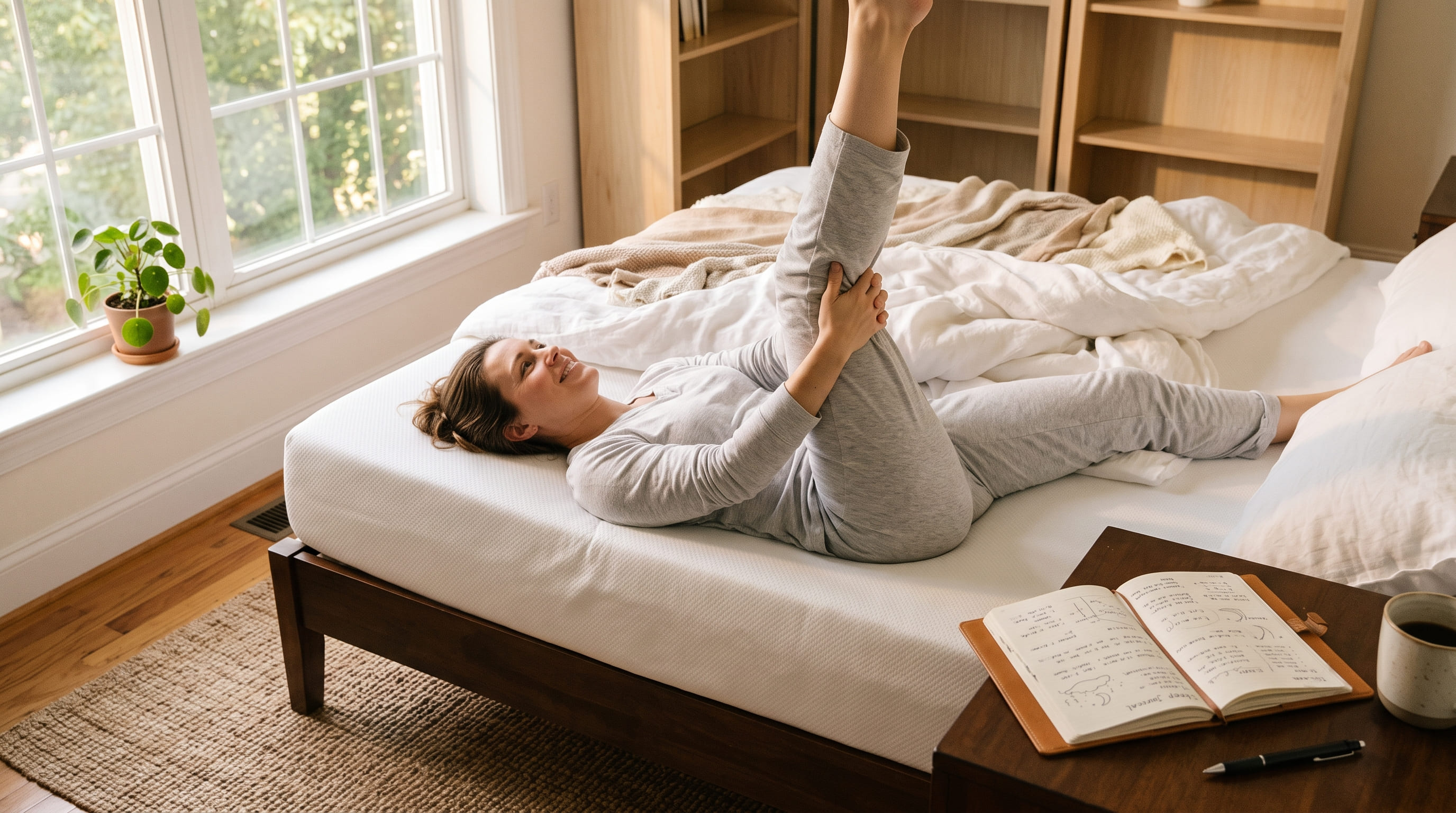
Weeks 1–2: Break-in period. Do not evaluate pain levels yet. All-foam mattresses need 1–2 weeks to soften to their intended feel. You may feel initial firmness that resolves on its own.
Weeks 3–5: First real assessment. Note: Are you waking with the same back pain as before, less pain, or no pain? Record morning stiffness on a 1–10 scale each day.
Weeks 6–8: Confirm or return. If morning back pain has reduced by this point, the mattress is working. If it has stayed the same or worsened, the firmness is likely wrong — either too soft or too firm.
Signs the mattress is too soft:
- You can feel your hips sinking when you lie down
- You wake with dull lower back pain that improves within 30 minutes of getting up
- You feel "stuck" in a depression in the mattress
Signs the mattress is too firm:
- You wake with hip or shoulder pain (pressure points)
- Morning stiffness is in the mid-back, not just the lower back
- You feel the mattress pushing against your lower back rather than supporting it
Other Factors That Affect Back Pain in Bed
A mattress is the most important factor — but not the only one.
Your pillow: The wrong pillow creates cervical misalignment that travels down to the thoracic and lumbar spine. Side sleepers need a thicker pillow to fill the space between the ear and shoulder. Back sleepers need a thinner, contoured pillow that supports the natural neck curve without pushing the head forward.
Your foundation: A slatted bed frame works best when slats are no more than 3 inches apart. Wider spacing allows foam mattresses to sag between slats, creating localised pressure points that show up as back pain. If you have a box spring more than 5 years old, replace it — a sagging base undermines even the best mattress.
Your sleep position over time: Side sleeping in the foetal position with both knees drawn up is the best position for lumbar disc pain. Back sleeping with a pillow under the knees (to reduce lumbar extension) is the best position for facet joint pain. Stomach sleeping should be avoided entirely for chronic back pain sufferers.
Frequently Asked Questions
Is a firm mattress better for back pain? Not necessarily. Research shows medium-firm mattresses reduce back pain more effectively than firm ones for most sleepers. The exception is stomach sleepers and heavier back sleepers over 220 lbs, who may benefit from a firmer surface to prevent hip sinkage.
How long until a new mattress helps my back pain? Allow at least 4–6 weeks after the break-in period. Most people notice meaningful improvement between weeks 3–6 if the mattress firmness is correct for their sleep position.
Can a mattress topper fix back pain caused by my current mattress? If your mattress is too firm, a 2–3 inch memory foam or latex topper can help temporarily. If your mattress is too soft or sagging, a topper will not fix the underlying problem — you need a new mattress. The Saatva Graphite Memory Foam Topper is our tested pick if you want to soften a too-firm surface.
What is the best sleeping position for lower back pain? Side sleeping with a pillow between the knees is the evidence-based best position for lumbar disc pain and general lower back pain. It keeps the lumbar spine in neutral alignment and prevents the hips from rotating.
How often should I replace my mattress if I have back pain? Every 7–8 years as a general rule. If you notice a visible body impression deeper than 1 inch, or if your back pain has worsened gradually over the past year, replace it immediately regardless of age.
Does mattress firmness matter more than mattress type for back pain? Yes. Getting the firmness right for your sleep position and body weight has more impact on back pain than the material type. A medium-firm memory foam and a medium-firm hybrid will both outperform a soft latex for a back sleeper — the firmness match matters most.
The Bottom Line
The best mattress for back pain is not the firmest — it is the one that keeps your spine in neutral alignment throughout the night for your specific sleep position and body weight.
For most back pain sufferers, that means:
- Medium to medium-firm firmness (5–7/10)
- Memory foam or hybrid construction — not traditional innerspring
- At least a 100-night sleep trial to properly evaluate its effect on your back
- Replace your mattress every 7–8 years — a sagging mattress is the most common cause of mattress-related back pain
Our top overall recommendation is the DreamCloud Classic at $535 — hybrid construction, medium-firm support, 365-night trial, and a lifetime warranty make it the most complete package for back pain sufferers at a non-premium price. For memory foam purists, the Nectar Classic at $699 is the strongest all-foam alternative, with pressure mapping data confirming excellent lumbar support for side and back sleepers up to 200 lbs.
Ready to shop? Browse our expert mattress reviews to find your perfect match.