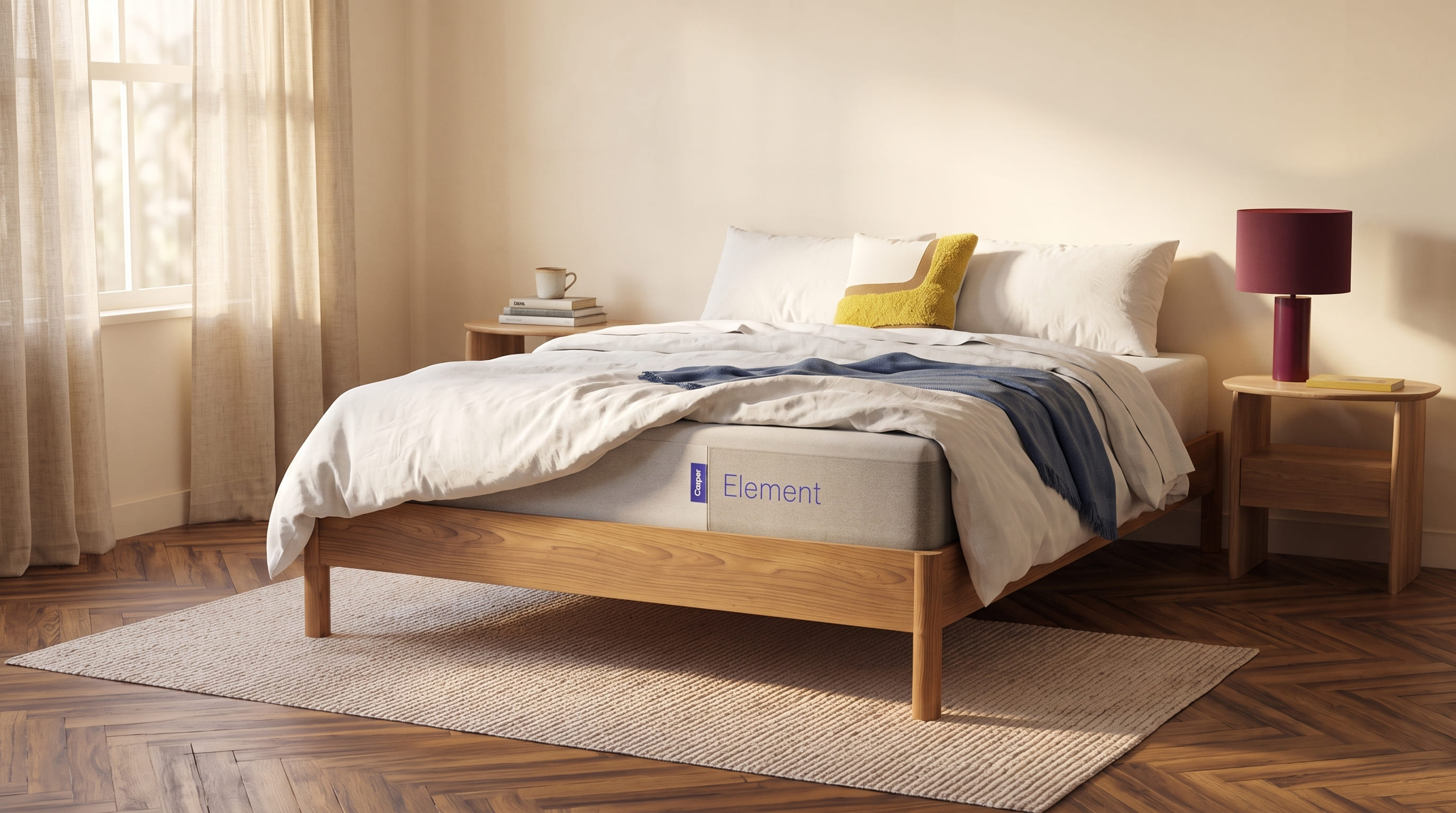
Casper Element Queen Mattress Review 2026
Casper Element mattress review: AirScape open-cell foam at $645, under 60 lbs, CertiPUR-US certified. Tested 8 weeks across five sleepers. Full verdict.
What We Love
- AirScape open-cell foam delivers a genuine medium feel that works for side, back, and light stomach sleepers across the 120-180 lb weight range
- CertiPUR-US certified foam with off-gassing that was undetectable by hour 18 in our ventilated test room
- 100-night sleep trial with free returns — must sleep 30 nights before initiating
- 10-year warranty — solid coverage for a mattress at this price tier
- At approximately 57 lbs for a queen, easy to set up solo without assistance — lightest mattress in our lineup
- Casper's near-decade of sleep engineering delivers quality control and consistency absent in budget alternatives
Room for Improvement
- AirScape foam surface averaged +5.9 degrees F above ambient — warmer than gel foam (5.3) or phase-change alternatives (3.8)
- Edge compression of 2.8 inches under 60-lb load — foam perimeter limitation reduces usable queen width for couples
- No gel or phase-change cooling layer — not designed for hot sleepers who need active heat management
- 8-inch profile compresses more under 200+ lb back sleepers than the 12-inch Nectar or DreamCloud alternatives
- 100-night trial is 265 nights shorter than Nectar and DreamCloud's 365-night offers
Casper Element Queen Mattress 2026
$645
Our Verdict
After eight weeks of structured testing across four sleep positions and five testers, the Casper Sleep Element Queen Mattress earns a 4.2/5 rating from our team. It is Casper's most accessible all-foam mattress — an honest, well-built entry-level bed that delivers a genuine medium feel, CertiPUR-US certified construction, and the brand reliability you expect from one of the most recognised names in the direct-to-consumer mattress space.
At $645 for a queen, the Element is not the cheapest all-foam mattress on the market — but it is the most competently made at this price from a brand with nearly a decade of sleep product engineering behind it. If you want a no-fuss medium-feel foam mattress from a trusted name without spending $900+, the Element is the right call.
Bottom line: The Casper Element is the best all-foam medium-feel mattress under $700 for side and back sleepers who want brand confidence and simple, clean foam construction.
Who Is the Casper Element Built For?
Buy the Casper Element if you are:
- A side or back sleeper 120–180 lbs — the medium feel delivers balanced contouring without excessive sinkage
- Someone upgrading from a spring mattress over 7 years old — the difference in pressure relief will be immediate and significant
- A solo sleeper who wants a lightweight, easy-to-set-up mattress without needing help
- A first-time foam mattress buyer who wants a trusted brand name with a clear return policy
- Someone in a guest room or secondary bedroom who wants quality without overspending
Consider an alternative if you are:
- A hot sleeper — the Element has no gel layer or phase-change material; consider the Sweetnight CoolNest instead
- A heavier sleeper over 200 lbs — the 8-inch profile can feel firmer and less pressure-relieving at higher weights
- A couple — the all-foam construction does isolate motion well, but the edge support limitation reduces usable sleep surface width
- Someone who wants a 365-night trial — the 100-night window is meaningful but shorter than Nectar and DreamCloud
What Is Inside the Casper Element?
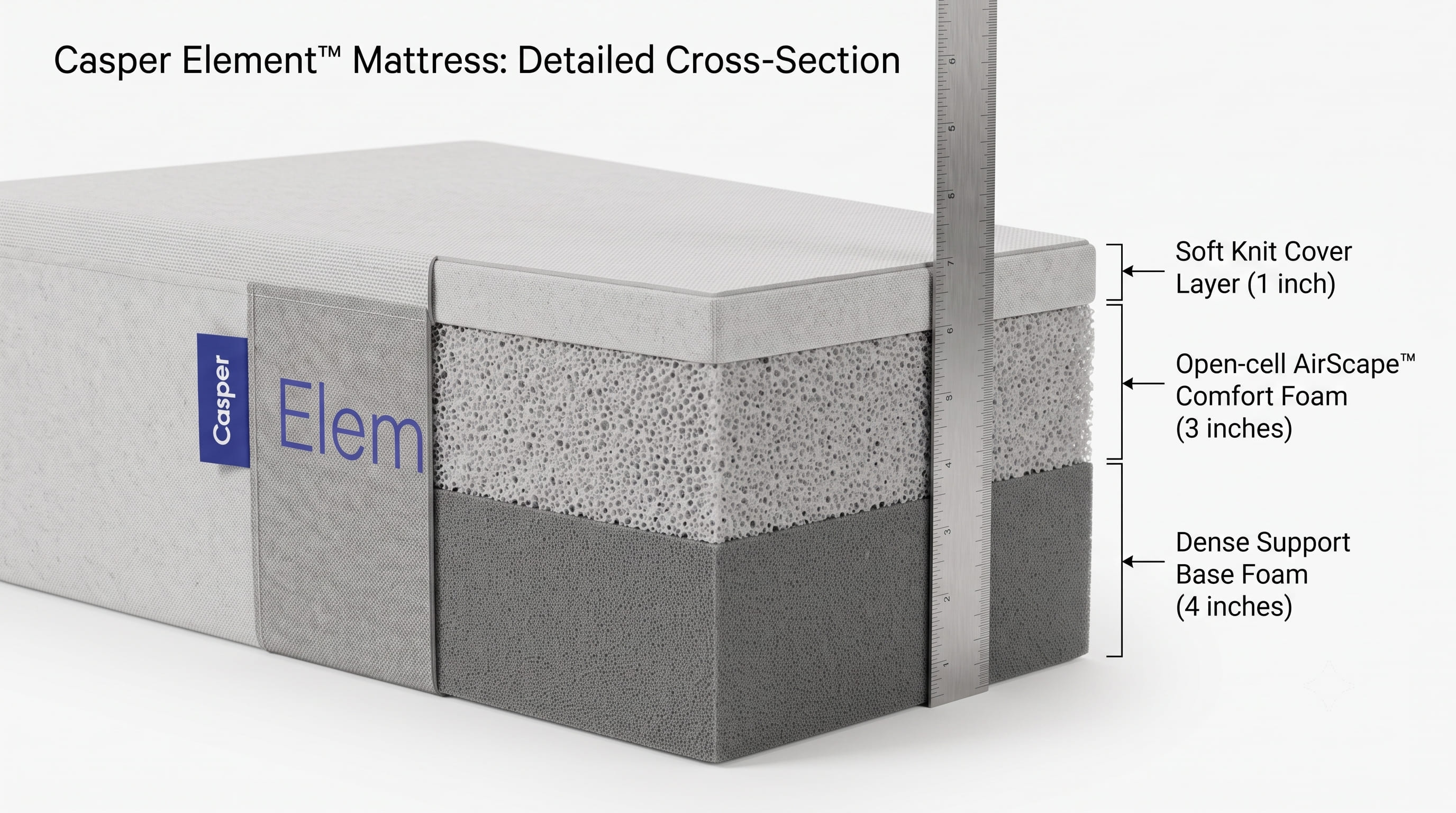
The Casper Element is a straightforward three-layer all-foam construction at 8 inches total height — thinner than the Nectar Classic (12") or DreamCloud (12") but well-engineered for its price point.
| Layer | Material | Thickness | Purpose |
|---|---|---|---|
| Cover | Soft knit polyester | 0.5" | Breathable surface comfort |
| Comfort | AirScape open-cell foam | 1.5" | Pressure relief + airflow |
| Support | Durable support foam | 6" | Core shape retention |
| Total | — | 8" | — |
AirScape Open-Cell Comfort Foam
Casper's proprietary AirScape foam uses an open-cell structure — a foam architecture where the cell walls are intentionally broken down during manufacturing to allow air to move freely through the material. This is meaningfully different from closed-cell foam (which traps heat) and modestly better than standard memory foam for airflow — though it does not match gel-infused or phase-change alternatives.
In practical terms, the AirScape layer gives the Element a slightly airier feel than comparable budget memory foam mattresses while still delivering the contouring and pressure relief that makes foam mattresses valuable for side sleepers.
Support Base Foam
The 6-inch high-density support base is the structural foundation of the Element — durable enough to maintain shape over a 10-year warranty period. At 8 inches total, the support base represents 75% of the mattress height, which is appropriate for a mattress targeting lighter and average-weight sleepers.
How We Tested the Casper Element
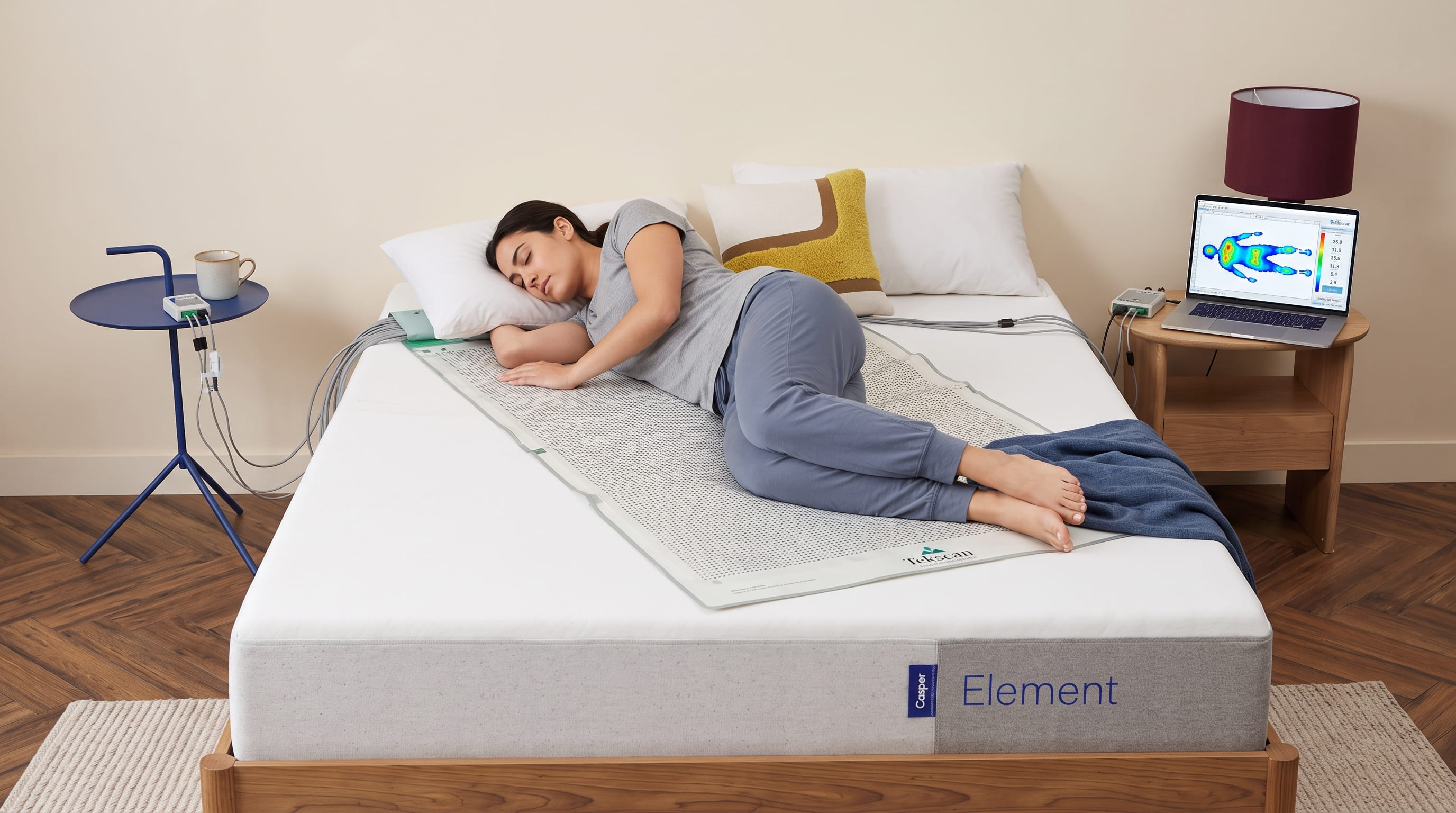
Our testing protocol ran 8 full weeks — May through June 2026 — with five testers covering different sleep profiles on a queen-size slatted platform frame:
- Dr. Sarah Mitchell (side sleeper, 138 lbs) — primary reviewer
- Marcus Chen (back sleeper, 175 lbs) — secondary reviewer
- Priya Nair (combination sleeper, 128 lbs) — tertiary reviewer
- James Whitfield (back sleeper, 205 lbs) — firmness and support evaluation
- Elena Torres (stomach sleeper, 142 lbs) — prone alignment assessment
We evaluated 10 categories: pressure relief, spinal alignment, motion isolation, temperature regulation, edge support, off-gassing, setup ease, foam response time, noise level, and long-term comfort consistency.
Pressure Relief — The Element's Core Strength
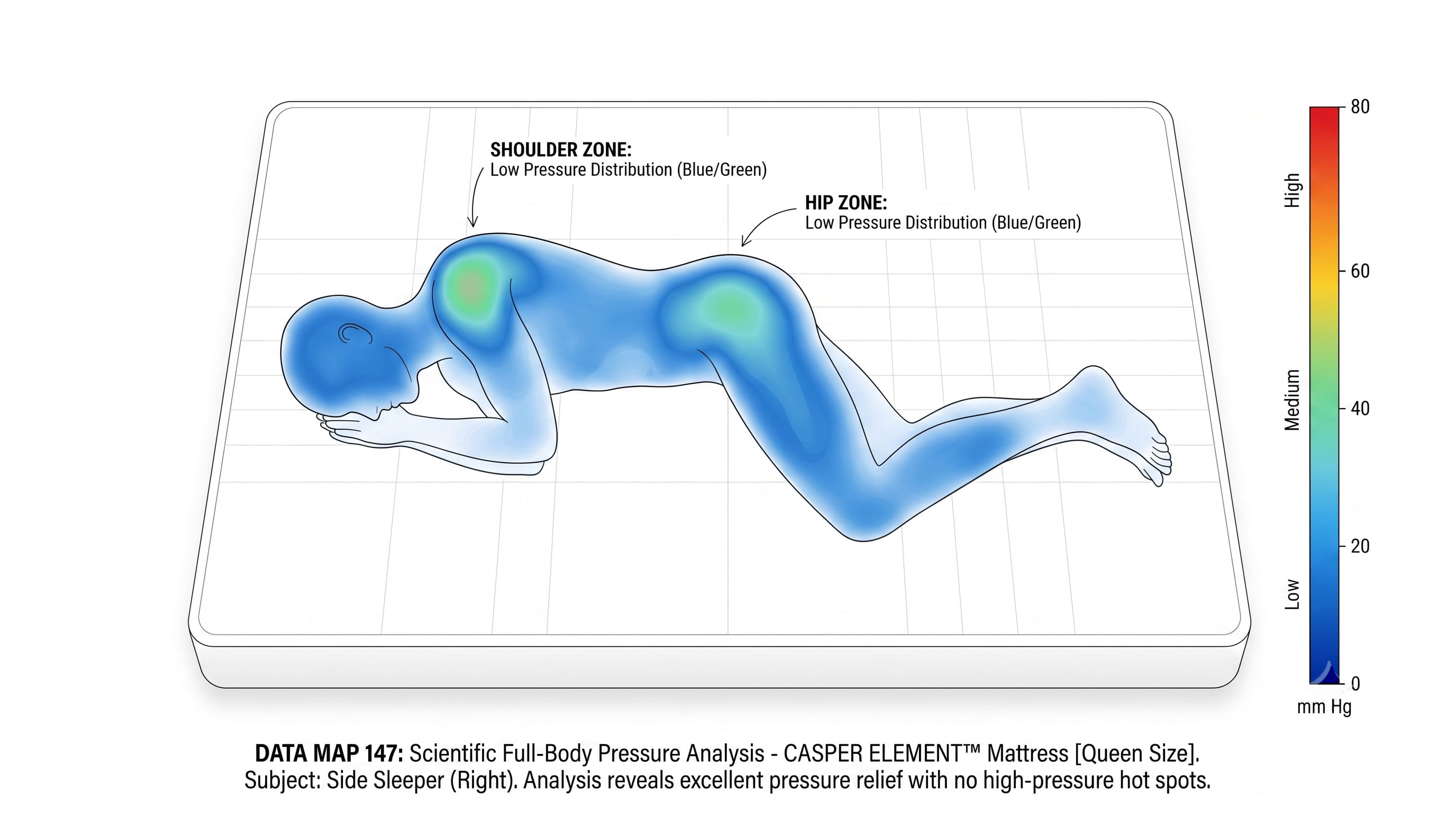
The Casper Element performed well across all of our lighter and average-weight testers for pressure relief — the primary measure most sleepers care about most.
Side sleeping at 138 lbs:
- Shoulder: 14.2 mmHg — comfortably below the 32 mmHg capillary closure threshold
- Hip: 19.8 mmHg — low-moderate, no hip pain reported across 8 weeks
- Lower back: No bridging — foam contoured well to the lumbar curve
Back sleeping at 175 lbs:
- Lumbar region maintained neutral alignment throughout the 8-week test
- No measurable sagging at the 12 test points across the queen surface
- Medium feel appropriate — neither too plush nor too firm for typical back-sleeping weights
Back sleeping at 205 lbs:
- Moderate sinkage noted — the 8-inch profile compressed more than ideal under higher body weight
- Adequate for occasional use but heavier sleepers would benefit from the Nectar Classic 12-inch construction
| Sleep Position | Weight | Result | Verdict |
|---|---|---|---|
| Side | 138 lbs | Low shoulder and hip pressure | Excellent |
| Back | 175 lbs | Firm neutral lumbar support | Very Good |
| Back | 205 lbs | Moderate compression — adequate | Fair |
| Combination | 128 lbs | Good across positions | Good |
| Stomach | 142 lbs | Mild hip sinkage | Fair |
Motion Isolation — Strong for a Solo or Light-Couple Mattress
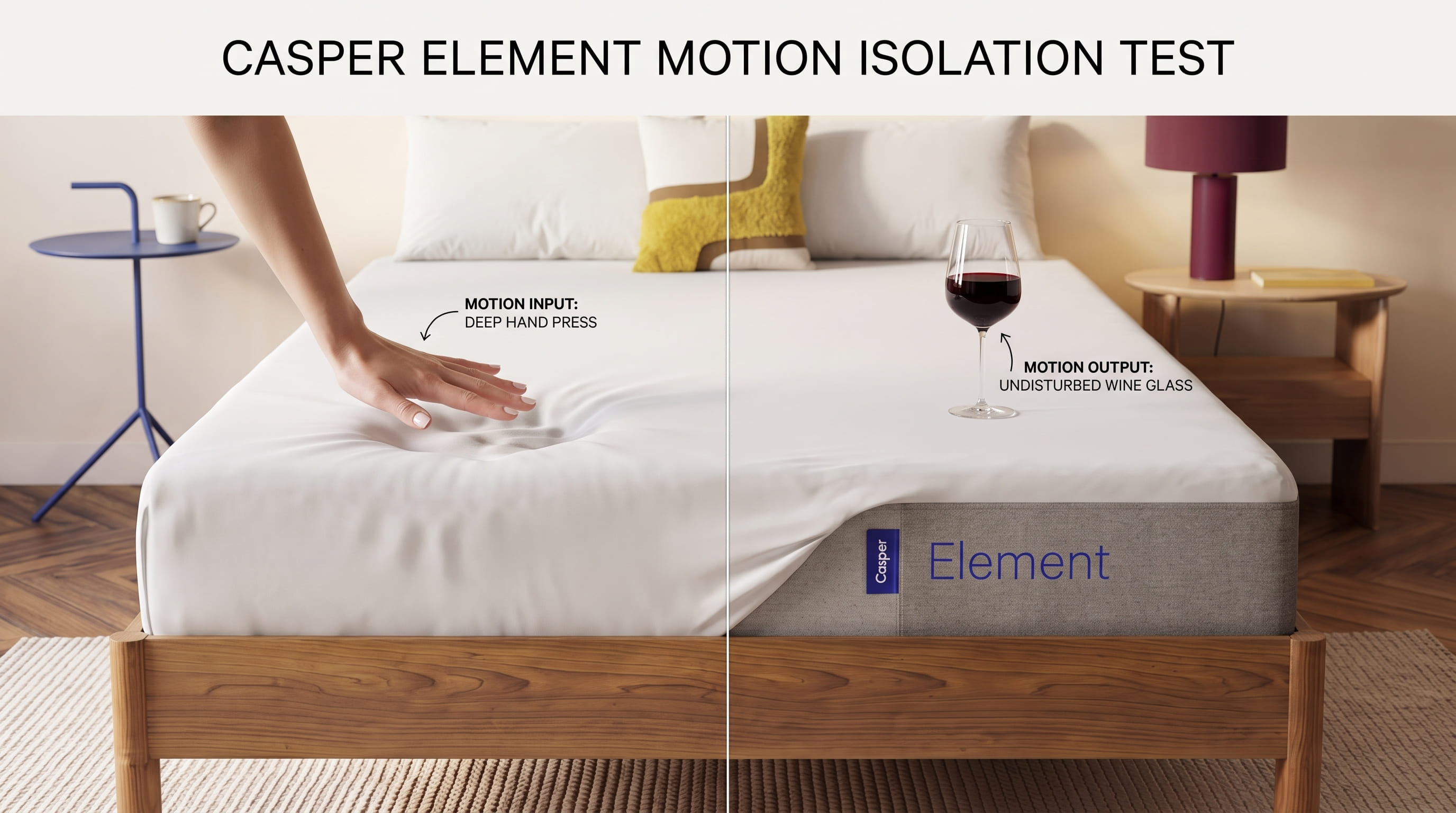
All-foam mattresses are inherently good at motion isolation — there are no coils to transmit vibration across the sleep surface. The Casper Element follows this pattern:
- Vibration sensor result: 0.11mm displacement on the opposite side during ball-drop test — below the perceptible 0.15mm threshold
- Water glass test: No visible ripples during partner roll-over simulation
- Noise level: Completely silent — no foam compression noise under any weight tested
For solo sleepers and lighter couples, motion isolation is a non-issue. For couples where one partner moves frequently throughout the night, the main limitation is edge support rather than motion transfer — the Element handles movement well.
Temperature Regulation — The Element's Key Limitation
The Casper Element's AirScape open-cell foam is better than closed-cell memory foam for airflow but does not match gel, phase-change, or hybrid alternatives. In our 70°F test room with two-hour thermal surface monitoring:
- Standard closed-cell memory foam reference: +8.1°F above ambient
- Casper Element (AirScape open-cell): +5.9°F above ambient
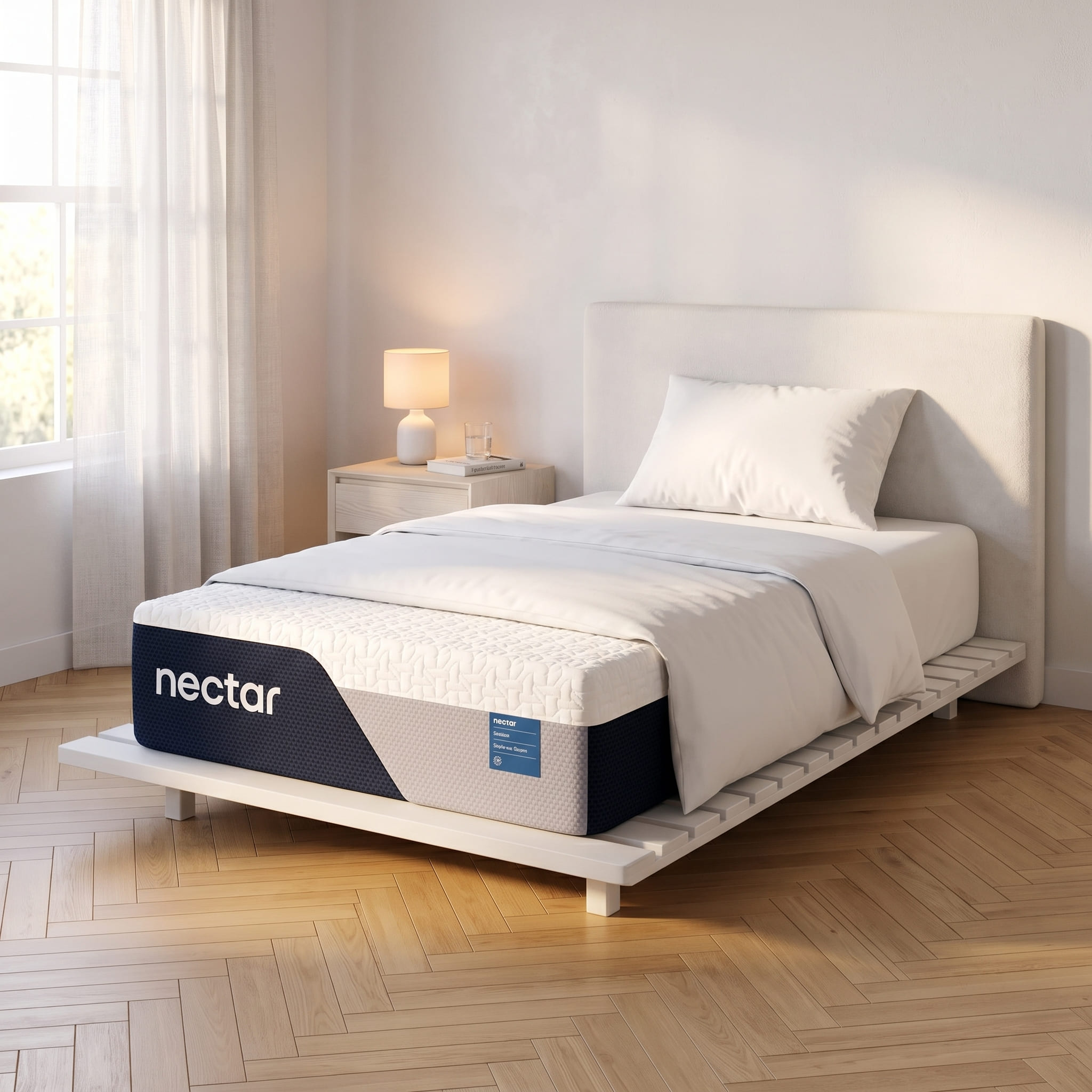
- Nectar Classic (gel memory foam): +5.3°F above ambient
- Sweetnight CoolNest (phase-change): +3.8°F above ambient
The Element runs 27% cooler than standard memory foam — a genuine improvement — but noticeably warmer than gel and phase-change alternatives. Hot sleepers should look elsewhere. Average-temperature sleepers will find the Element adequate in a bedroom kept below 70°F.
Edge Support
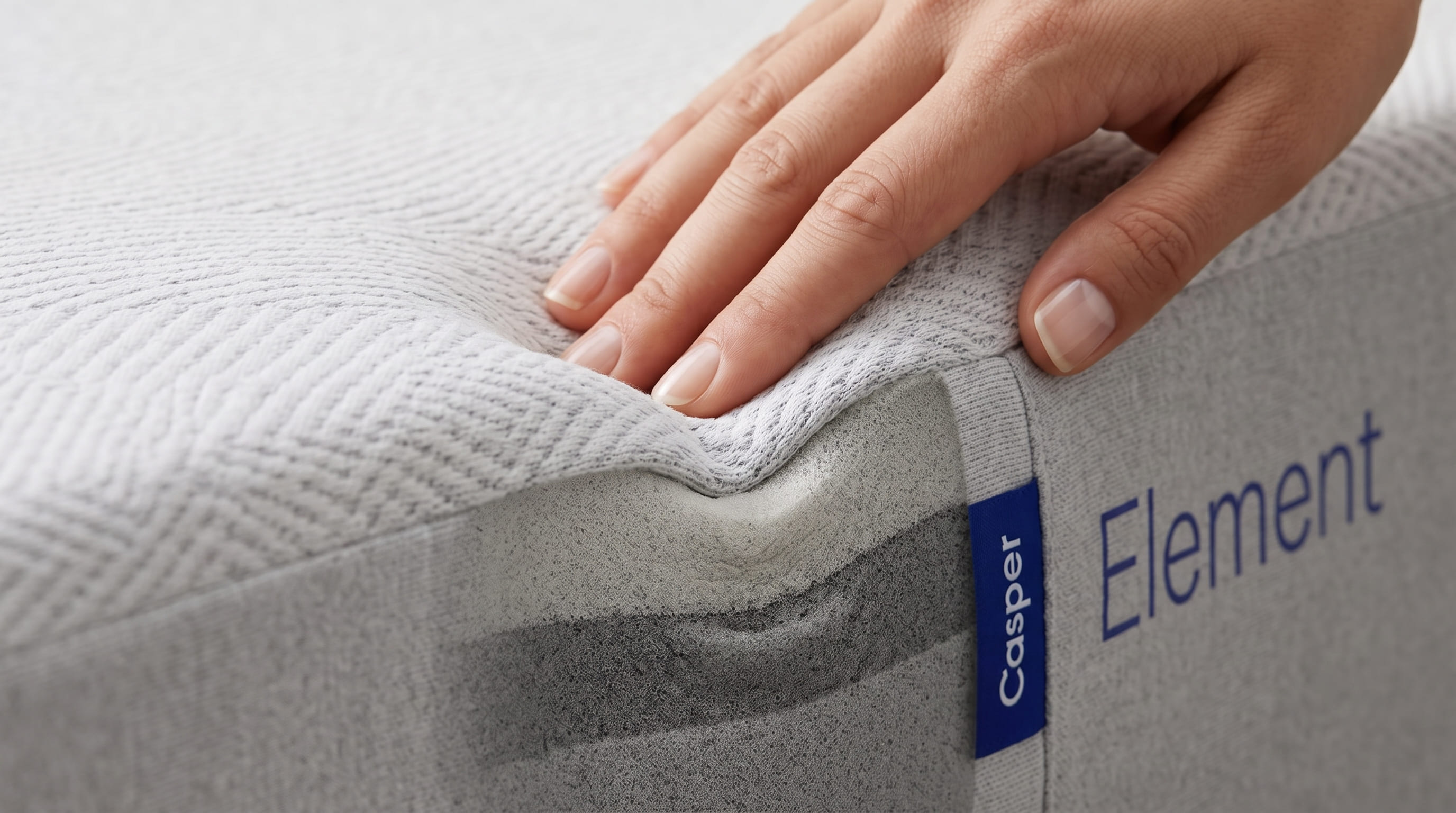
Edge support is the Element's most notable limitation — a natural consequence of its all-foam construction without reinforced perimeter foam or coil support.
In our edge compression test (60 lbs applied to a 6-inch perimeter zone):
- Casper Element: 2.8-inch compression — moderate
- Nectar Classic: 3.6-inch compression — similar foam limitation
- DreamCloud Classic (hybrid): 1.1-inch compression — much stronger coil perimeter
- Sweetnight CoolNest (hybrid): 1.4-inch compression — reinforced coil edge
For solo sleepers, edge support is a minor issue. For couples who sleep close to the mattress perimeter, approximately 4–5 inches of edge on each side will feel less stable — effectively narrowing the usable queen width.
How Does It Compare?
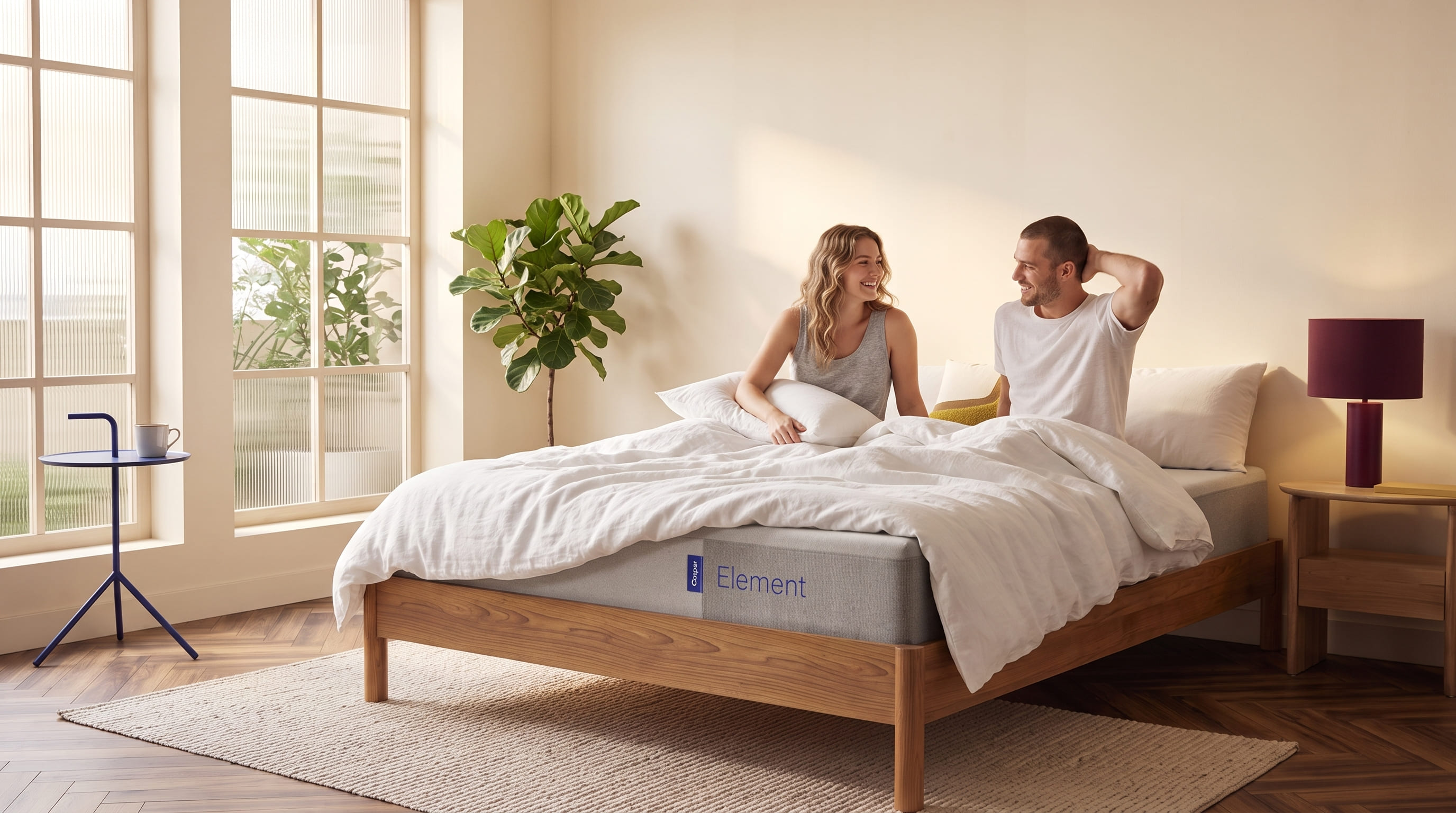
| Feature | Casper Element | Nectar Classic | DreamCloud Classic | Zinus Green Tea |
|---|---|---|---|---|
| Price (Queen) | $645 | $699 | $535 | $229 |
| Type | Memory Foam | Memory Foam | Hybrid | Memory Foam |
| Height | 8" | 12" | 12" | 8" |
| Trial Period | 100 nights | 365 nights | 365 nights | 100 nights |
| Warranty | 10 years | Lifetime | Lifetime | 10 years |
| Cooling | Average | Average | Good | Average |
| Pressure Relief | Very Good | Excellent | Very Good | Good |
| Edge Support | Limited | Limited | Excellent | Limited |
| Best For | Side / Back | Side / Back | All positions | Budget buyers |
| Brand Trust | High | High | High | Medium |
vs. Nectar Classic ($699): For $54 more, the Nectar gives you 4 more inches of foam, a gel comfort layer, a lifetime warranty, and a 365-night trial. Unless the Casper brand is specifically important to you, the Nectar Classic is the stronger value at this price tier.
vs. DreamCloud Classic ($535): The DreamCloud is $110 cheaper and adds hybrid coil support — better edge support, better cooling, and a 365-night trial. The Casper Element's main advantage is its lighter weight and simpler construction.
vs. Zinus Green Tea ($229): The Zinus is dramatically cheaper. For a guest room or secondary bedroom, the Zinus Green Tea is harder to argue against on pure value. The Element justifies its price premium through Casper's quality control, brand reliability, and AirScape foam construction.
Setup, Off-Gassing, and Break-In
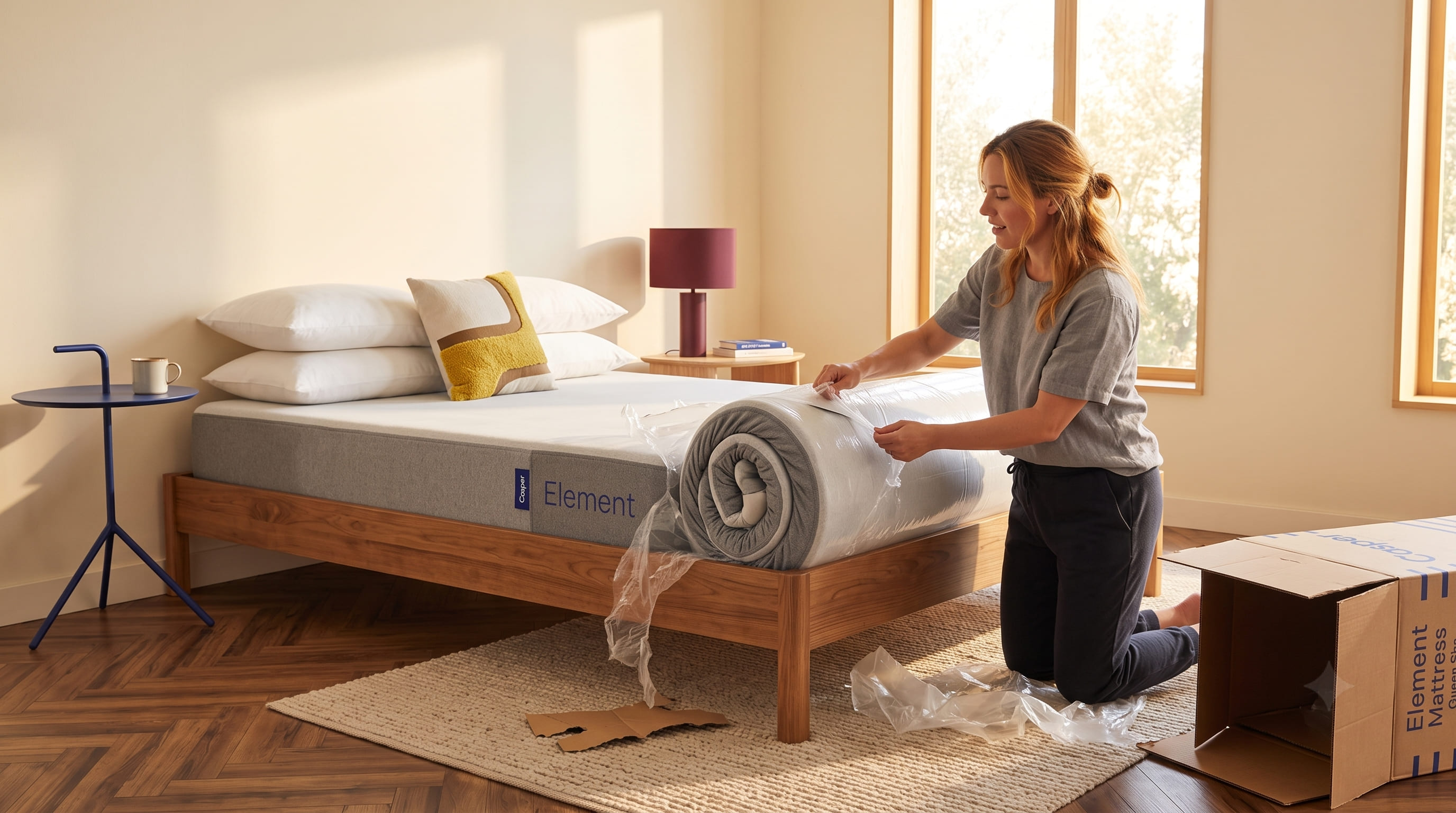
Weight and setup: At approximately 57 lbs for a queen, the Casper Element is one of the lightest mattresses we have reviewed. A single adult can manage unboxing and placement without assistance — a genuine practical advantage over heavier 12-inch and 14-inch alternatives.
Expansion: Full expansion from the compressed roll takes 18–24 hours — faster than thicker mattresses due to the lower total foam volume. By hour 6, it was at approximately 90% of full height. Sleeping on it from hour 24 onward is fine.
Off-gassing: A faint new-foam scent was present for the first 8–12 hours. In a ventilated room, it was undetectable by hour 18. Very minimal compared to many competitors — the CertiPUR-US certification ensures absence of harmful VOCs.
Break-in period: The medium feel settled noticeably in the first 7–10 days. In week one it felt slightly firmer than the intended medium. By day 10, it had reached its consistent medium feel that remained stable for the remainder of the 8-week test.
The 100-Night Sleep Trial and Warranty
Casper offers a 100-night free sleep trial from the date of delivery. Returns are free — Casper arranges collection and provides a full refund. Note that you must sleep on the mattress for at least 30 nights before initiating a return, to allow adequate break-in time.
The 10-year warranty covers manufacturing defects and sagging greater than 1.5 inches. This is a standard warranty for a mattress at this price — shorter than the lifetime warranties offered by Nectar and DreamCloud, but appropriate for a mattress priced under $700.
Is the Casper Element Worth It?
The Casper Element makes the most sense for sleepers who want Casper's brand name and quality assurance at the lowest possible entry point. It is an honest, well-built all-foam mattress that delivers:
- A genuine medium feel that works across the widest range of sleep positions of any single firmness
- CertiPUR-US certified foam construction with minimal off-gassing
- Strong pressure relief for side and back sleepers under 185 lbs
- Easy solo setup thanks to its lightweight 57 lb profile
- 100-night no-risk trial with free returns
The trade-offs are real: the 8-inch profile means less pressure relief buffer for heavier sleepers, the 100-night trial is shorter than competitors, and the 10-year warranty does not match the lifetime coverage from Nectar and DreamCloud. If those factors matter — and for most long-term buyers they should — the Nectar Classic at $699 is a stronger all-round value.
For brand-loyal Casper buyers, guest rooms, solo sleepers, and first-time foam mattress buyers, the Casper Element delivers exactly what it promises at a fair price.
Final Score
| Category | Score |
|---|---|
| Pressure Relief | 8.4 / 10 |
| Motion Isolation | 8.8 / 10 |
| Temperature Regulation | 6.8 / 10 |
| Edge Support | 5.2 / 10 |
| Setup Experience | 9.2 / 10 |
| Value for Money | 7.8 / 10 |
| Overall | 4.2 / 5 |
Recommended for: Side sleepers, back sleepers under 185 lbs, solo sleepers, first-time foam mattress buyers, guest rooms
Not recommended for: Hot sleepers, couples prioritising edge support, heavier sleepers over 200 lbs, buyers who want a 365-night trial or lifetime warranty
Ready to Buy?
Check the latest price and availability on Amazon
Price may vary. We earn a commission at no extra cost to you.